
Shaoqing Ren: Biography, Career, Research and Key Facts
Shaoqing Ren’s Journey From AI Research to Autonomous Driving

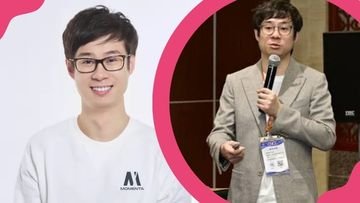
Introduction
Shaoqing Ren (任少卿) is a Chinese computer scientist whose work has played an important role in the development of modern artificial intelligence and computer vision. He is particularly known for research behind Faste R-CNN, ResNet, PReLU, and other influential deep-learning methods. His academic work has helped shape how machines recognize objects, process images, and learn increasingly complex visual representations.
Beyond academic research, his career has moved into autonomous driving and large-scale AI applications. He has held a senior leadership position at NIO while also returning to the University of Science and Technology of China (USTC) as a Chair Professor and doctoral supervisor. USTC currently lists his research interests as including artificial intelligence, world models, embodied intelligence, autonomous driving, computer vision, deep learning, and AI for Science.
His story is therefore not limited to academic papers. It also reflects the growing connection between fundamental AI research, intelligent vehicles, robotics, and next-generation artificial intelligence.
Quick Facts About Shaoqing Ren
| Category | Details |
|---|---|
| Full Name | Shaoqing Ren (任少卿) |
| Profession | Computer Scientist, AI Researcher and Executive |
| Field | Artificial Intelligence, Computer Vision, Deep Learning |
| Undergraduate Degree | USTC, Information Security, 2011 |
| Doctorate | USTC–Microsoft Research Asia joint program, 2016 |
| University | University of Science and Technology of China |
| Current Academic Role | Chair Professor and Doctoral Supervisor |
| Academic Leadership | Head of USTC Institute of Artificial Intelligence |
| Industry | NIO |
| Known For | Faster R-CNN, ResNet, PReLU and AI research |
| Research Interests | AI, Computer Vision, World Models, Embodied Intelligence |
| Nationality | Chinese |
Who Is Shaoqing Ren?
Shaoqing Ren is a computer scientist specializing in artificial intelligence and computer vision. His early academic career became closely associated with several research projects that later became important building blocks of modern deep learning.
He worked with researchers including Kaiming He and Jian Sun on influential neural-network research. His name appears among the authors of major papers such as Deep Residual Learning for Image Recognition, Faster R-CNN: Towards Real-Time Object Detection with Region Proposal Networks, and Delving Deep into Rectifiers.
Today, his work extends beyond traditional computer vision. USTC identifies his current research interests as artificial intelligence, world models, embodied intelligence, autonomous driving, computer vision, deep learning, and AI for Science.
This combination of research and industry experience has made him a notable figure in China’s AI and autonomous-driving ecosystem.
Early Life and Background
Publicly available professional biographies focus much more heavily on his education and research career than on his childhood. Detailed information about his parents, hometown, early family life, or upbringing is not widely documented in authoritative sources.
What is well documented is his academic path. He studied Information Security at the University of Science and Technology of China and completed his bachelor’s degree in 2011. He subsequently pursued doctoral research through the joint USTC–Microsoft Research Asia program.
His doctoral work was completed in 2016 in Electronic Science and Technology. His academic training gave him a strong foundation in machine learning, computer vision, algorithms, and deep neural networks.
That foundation became especially important during the rapid development of deep learning in the early and mid-2010s.
Education and Academic Journey
USTC has been an important institution throughout his professional life. After completing his undergraduate education there, he continued his research through the university’s joint doctoral program with Microsoft Research Asia.
His academic period coincided with a major transformation in computer vision. Neural networks were becoming increasingly capable, while researchers were searching for better methods to train deeper and more accurate models.
During this period, Ren became involved in research that addressed some of the central technical challenges facing computer vision. His publications from this era include work on face alignment, random forests, rectifier networks, residual learning, and object detection.
In September 2025, he returned to USTC as a Chair Professor. The university currently lists him as a doctoral supervisor and Head of its Institute of Artificial Intelligence.
Research and Major Achievements
One of the strongest parts of Ren’s career is his contribution to computer vision and deep learning. His research has addressed practical problems such as object detection and face alignment while also contributing to fundamental neural-network architecture.
The Faster R-CNN paper, published in 2015, introduced a region proposal network that helped make object detection more efficient by integrating region proposal generation with the detection system. Ren was the first-listed author alongside Kaiming He, Ross Girshick, and Jian Sun.
He also co-authored Deep Residual Learning for Image Recognition, the landmark ResNet paper. The research demonstrated that residual learning could make substantially deeper neural networks easier to optimize, with experiments reaching networks as deep as 152 layers.
Another important contribution came through the PReLU research. The 2015 ICCV paper introduced the Parametric Rectified Linear Unit and reported a 4.94% top-five error rate in a multi-model ImageNet result, surpassing the previously reported human-level benchmark described in the paper.
Faster R-CNN and Computer Vision
Faster R-CNN is one of the works most strongly associated with Ren’s academic legacy. The system was designed to improve object detection by using a Region Proposal Network to generate candidate regions that could then be processed by the detector.
The importance of this research extends beyond one individual application. Faster R-CNN became a widely referenced approach in computer vision research and has subsequently been used as a foundation or comparison point in many visual-recognition studies.
For the broader AI field, the work demonstrated how neural networks could perform increasingly sophisticated visual tasks while reducing the separation between different stages of object detection.
ResNet and Deep Learning
Ren’s involvement in ResNet is another major part of his professional profile. The residual-learning approach addressed a major difficulty: simply making neural networks deeper did not automatically make them easier to train.
The ResNet paper introduced a framework that allowed layers to learn residual functions relative to their inputs. Experiments showed that networks could be trained at significantly greater depths, including a 152-layer model.
The research went on to become one of the most influential developments in computer vision. In 2026, USTC reported that the ResNet paper received the CVPR Longuet-Higgins Prize, recognizing its lasting influence after a decade.
This recognition illustrates how research from the mid-2010s continues to influence modern AI systems.
Career in Industry and Autonomous Driving
Ren’s career later expanded from academic research into commercial artificial intelligence and autonomous driving. NIO has publicly identified him as a senior vice president, and its corporate materials have associated him with the company’s autonomous-driving development.
At NIO, his expertise in computer vision and machine learning has been connected with the development of intelligent-driving technologies. This represents a natural progression from his earlier research because autonomous vehicles depend heavily on visual perception, object detection, sensor processing, prediction, and decision-making.
The transition from research laboratories to vehicle systems also demonstrates how theoretical advances in AI can eventually become components of consumer-facing technology.
USTC Leadership and New Research Directions
His return to USTC marked another important stage in his career. The university describes him as a Chair Professor, doctoral supervisor, and leader of its Institute of Artificial Intelligence.
His current research interests are broader than the computer-vision problems that first made his academic work widely known. USTC lists world models, embodied intelligence, autonomous driving, AI for Science, deep learning, and computer vision among his areas of research.
These areas reflect a wider shift in AI research toward systems that can understand environments, reason about them, and interact with the physical world.
Her Age and Physical Features
Because Shaoqing Ren is male, this section is more appropriately understood as information about his age and appearance. His exact date of birth is not prominently documented in the authoritative academic profiles reviewed for this article.
For that reason, an exact age should not be stated without a reliable biographical source. Similarly, detailed information about his height, weight, eye color, hairstyle, or other physical characteristics is not consistently documented in official professional biographies.
His public profile is primarily academic and professional, with his research publications and institutional positions receiving considerably more attention than personal appearance.
Relationship With Others
Ren has worked with several prominent researchers during his academic career. His most notable collaborations include Kaiming He, Xiangyu Zhang, Ross Girshick, and Jian Sun.
His name appears alongside these researchers on major publications covering residual learning, object detection, and neural-network rectifiers.
These collaborations were significant because they brought together researchers working on different aspects of computer vision and deep learning. However, his professional relationships should be understood primarily in an academic and research context rather than as evidence of personal friendships.
Marriage and Family Life
Shaoqing Ren keeps his personal life relatively private. Reliable public sources reviewed for this biography do not provide substantial information about his spouse, children, parents, or wider family life.
As a result, claims about his marriage status or family members should be treated cautiously unless supported by a trustworthy biographical source.
His public identity is instead centered on his scientific work, academic responsibilities, and leadership in artificial intelligence.
Personality and Interests
There is limited reliable public information that describes Ren’s personality in a personal or psychological sense. It is therefore more appropriate to discuss the professional interests visible through his research.
His work shows a sustained interest in artificial intelligence, computer vision, deep learning, autonomous driving, world models, embodied intelligence, and AI for Science.
The breadth of these interests suggests a research career that has evolved alongside the AI industry itself. His work moved from visual recognition and neural-network architecture toward intelligent vehicles and broader questions involving physical and general-purpose AI.
Social Media Presence
Ren does not appear to maintain a highly visible public social-media profile comparable to entertainers or mainstream public personalities.
His professional presence is instead centered on academic and institutional platforms. USTC maintains an official faculty profile that identifies his academic position, research areas, and supervisory role.
For readers interested in his latest professional activities, university announcements and academic publications are generally more useful sources than entertainment-style social-media accounts.
Net Worth and Income
There is no reliable public figure for Shaoqing Ren’s personal net worth. His compensation from NIO, academic income, investments, and other private financial arrangements are not comprehensively disclosed in the sources used for this biography.
NIO’s corporate filings do identify him as a senior vice president and disclose certain ownership information connected with an NIO-related entity. However, such corporate disclosures should not be interpreted as a complete calculation of his personal wealth or annual income.
Therefore, online estimates of his net worth should be treated cautiously unless they are supported by documented financial information.
Public Image and Legacy
Ren’s public image is strongly connected to his scientific contributions rather than celebrity culture. His research helped address fundamental problems in computer vision at a time when deep learning was rapidly becoming the dominant approach.
His association with Faster R-CNN and ResNet is particularly important. These works became part of the technical foundation on which many later computer-vision systems were developed.
His continuing work in autonomous driving and emerging AI fields adds another dimension to that legacy. Rather than remaining focused exclusively on academic benchmarks, his career has extended into large-scale industrial applications and newer research directions such as embodied intelligence and world models.
The 2026 CVPR recognition for ResNet further highlighted the long-term influence of research he co-authored.
Why Shaoqing Ren Matters in AI
The significance of Ren’s career can be understood through the progression of his work. Early research addressed how computers could identify and understand visual information. Later work helped make deep neural networks more powerful and easier to train.
The next stage involved applying AI to autonomous driving, where machines must interpret complex real-world environments. His current academic interests go even further toward embodied intelligence, world models, and AI for Science.
This progression mirrors one of the central stories of modern artificial intelligence: moving from systems that recognize patterns in data toward systems that can understand environments and operate within the physical world.
Conclusion
Shaoqing Ren’s career connects some of the most influential developments in modern computer vision with the rapidly expanding world of autonomous driving and advanced artificial intelligence. His contributions to Faster R-CNN, ResNet, and PReLU helped address important technical challenges in visual recognition and deep learning.
His professional journey has also continued to evolve. From his education at USTC and research associated with Microsoft Research Asia to senior industry leadership at NIO and his return to USTC as a Chair Professor, his career spans both academia and industry.
As his research interests increasingly include world models, embodied intelligence, and AI for Science, his work remains closely connected to some of the major directions shaping the next generation of artificial intelligence.
8 FAQs About Shaoqing Ren
1. Who is Shaoqing Ren?
Shaoqing Ren is a Chinese computer scientist and AI researcher known for influential work in computer vision and deep learning. He is also a senior executive at NIO and a Chair Professor at USTC.
2. What is Shaoqing Ren famous for?
He is particularly known for co-authoring research on Faster R-CNN, ResNet, and PReLU, all of which have had significant influence on computer vision and deep learning.
3. Where did Shaoqing Ren study?
He studied at the University of Science and Technology of China, earning his bachelor’s degree in Information Security in 2011 and his doctorate through the USTC–Microsoft Research Asia joint program in 2016.
4. What is Shaoqing Ren’s role at USTC?
USTC currently lists him as a Chair Professor and doctoral supervisor and identifies him as the Head of the Institute of Artificial Intelligence.
5. What is Faster R-CNN?
Faster R-CNN is a deep-learning object-detection framework that introduced a Region Proposal Network to improve the efficiency of generating candidate object regions. Ren was the first-listed author of the influential 2015 paper.
6. Did Shaoqing Ren work on ResNet?
Yes. He was a co-author of the 2016 CVPR paper introducing the Deep Residual Learning framework, widely known as ResNet.
7. What are Shaoqing Ren’s current research interests?
USTC lists artificial intelligence, world models, embodied intelligence, autonomous driving, computer vision, deep learning, and AI for Science among his research areas.
8. What is known about Shaoqing Ren’s personal life?
Relatively little reliable information about his marriage, children, parents, or private family life is publicly documented. His available professional biographies focus primarily on his education, research, academic positions, and industry career.
